In this guide
- Ask what the relationship covers Northwell's July 2026 transportation-to-respiratory-therapy account describes mentorship alongside formal education. It is a published individual journey, not evidence that mentorship grants entry to a program or qualifies someone for clinical work. Use it as a reason to ask about available support, not as a template that must happen for you.
- Prepare a question that fits A mentor question might be, “What should I understand before I choose this learning direction?” An instructor question might be, “Can you explain the boundary in the approved exercise?” An evaluator question might be, “What evidence will the formal assessment require?” These are original examples, not Northwell scripts.
- Respect confidentiality limits Do not assume that an informal conversation carries the same confidentiality rules as a professional support service. Ask how information is handled when that matters. Share only what is needed and avoid patient records, private personnel details and credentials.
- End with the next source A useful conversation often ends with a referral to another person or approved resource. Confirm what you should ask there and what, if anything, can be shared. Keep your own note focused on the learning question. The aim is a stronger support network, not a collection of unofficial approvals.
- Sources and scope
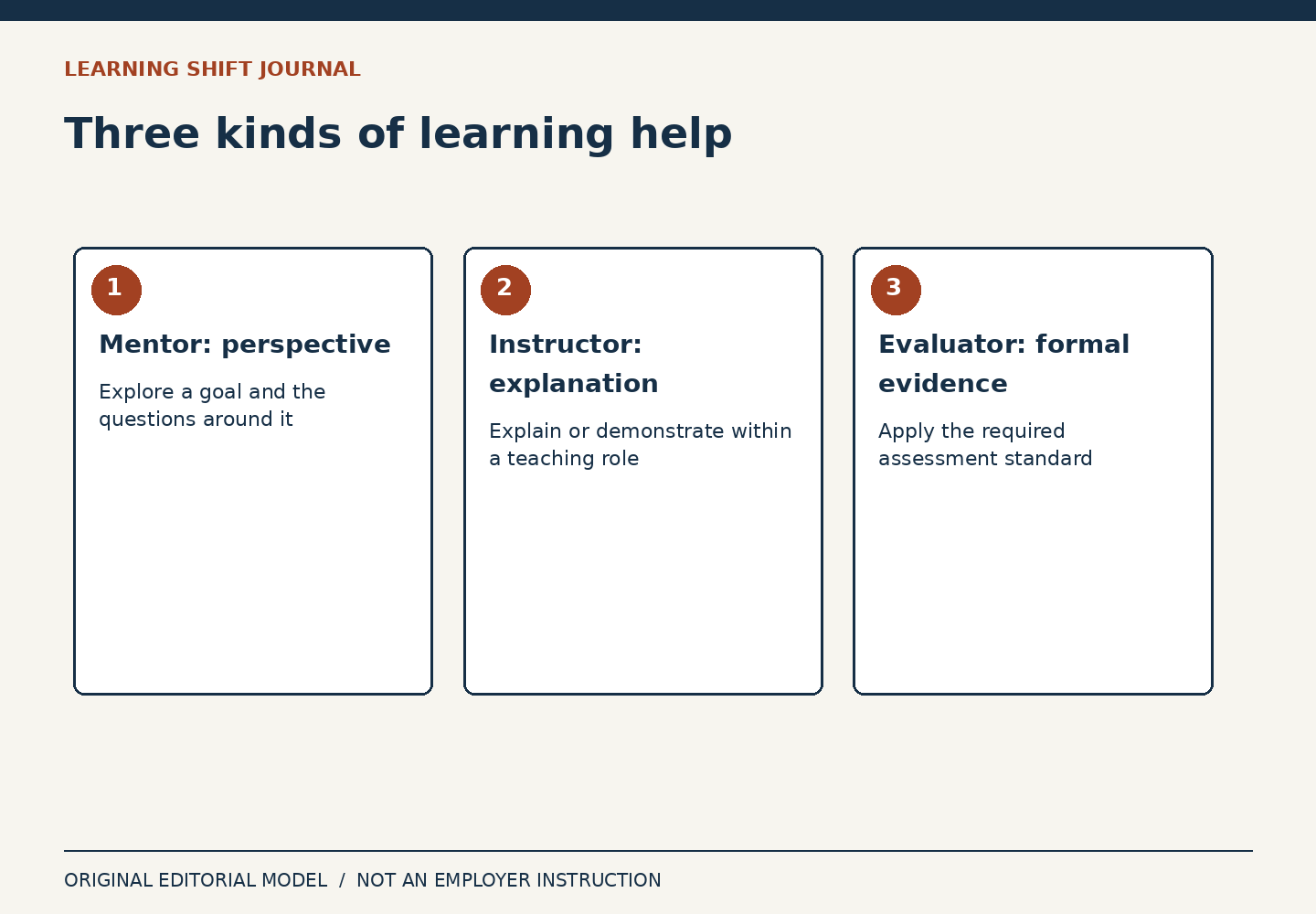
A person can be helpful without holding every kind of authority. A mentor may help you think through a learning goal. An instructor may teach a defined skill. An evaluator may decide whether required evidence meets a standard. Sometimes one person has several roles; sometimes the roles are deliberately separate. The distinction helps Northwell team members make better requests.
Ask what the relationship covers Northwell's July 2026 transportation-to-respiratory-therapy account describes mentorship alongside formal education. It is a published individual journey, not evidence that mentorship grants entry to a program or qualifies someone for clinical work. Use it as a reason to ask about available support, not as a template that must happen for you.
Before a conversation, say what you need: perspective on a goal, explanation of a task or confirmation of a requirement. The person can then tell you whether they are the right source. Do not infer authority from seniority, friendliness or a familiar title alone.
Prepare a question that fits A mentor question might be, “What should I understand before I choose this learning direction?” An instructor question might be, “Can you explain the boundary in the approved exercise?” An evaluator question might be, “What evidence will the formal assessment require?” These are original examples, not Northwell scripts.
If the answer depends on current eligibility, funding, scheduling or professional requirements, ask the owner of that decision. A mentor's encouragement is not an approval. Keep any financial or employment decision separate until the actual terms are confirmed through the official process.
Respect confidentiality limits Do not assume that an informal conversation carries the same confidentiality rules as a professional support service. Ask how information is handled when that matters. Share only what is needed and avoid patient records, private personnel details and credentials.
A person who observes your work may also have responsibilities to report certain concerns. That does not make them untrustworthy; it means the role has boundaries. Knowing those boundaries helps both of you choose an appropriate learning example.
End with the next source A useful conversation often ends with a referral to another person or approved resource. Confirm what you should ask there and what, if anything, can be shared. Keep your own note focused on the learning question. The aim is a stronger support network, not a collection of unofficial approvals.
Sources and scope
Public sources checked October 5, 2026. Dated accounts remain historical; examples and planning methods in this article are original editorial constructions.
- Northwell: From transportation to respiratory therapy
A July 2026 published career account provides context for mentorship and formal education; it is not a universal pathway or benefit promise.
- Northwell: Nursing externships and fellowships
Public program descriptions illustrate supervised learning; no reader admission, competence or work authority is implied.